Research
01 Materials Science & Quantum Physics
Discover new materials and quantum phenomena through precision epitaxy.
Details : Materials Science & Quantum Physics02 AI for Science & Self-Driving Laboratories
Accelerate discoveries through physics-informed Bayesian optimization, interpretable autonomous experiments, and AI-driven laboratories powered by collaboration among large language models (LLMs).
Details : AI for Science & Self-Driving Laboratories01 Materials Science & Quantum Physics
[Magnetic insulators]
The world's highest Curie temperature among insulators and oxides
Sr₃OsO₆ sets a new benchmark for high-temperature magnetism, breaking a record that stood for more than eight decades.
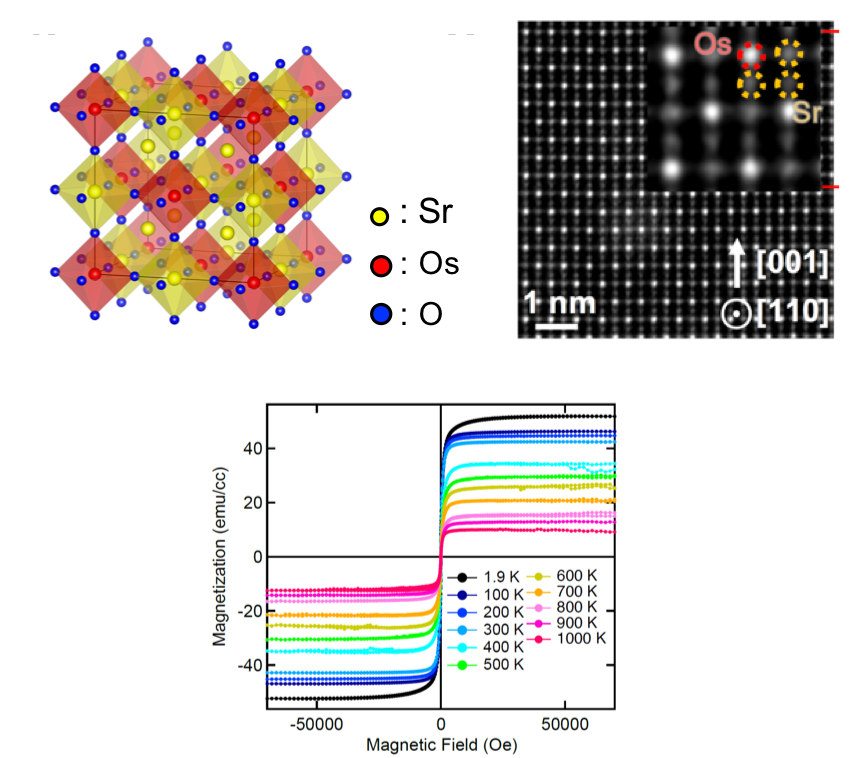
We discovered Sr₃OsO₆, a highly cation-ordered double-perovskite insulator with a Curie temperature of approximately 1060 K—the highest reported among all insulators and oxides. This advances the long-standing record by more than 100 K.
Atomic-resolution microscopy reveals the ordered Sr and Os sublattices, while electronic-structure calculations identify a spin-orbit-coupled insulating state. The discovery establishes a route to high-temperature ferromagnetism in a 5d oxide without a 3d transition-metal element.
[Magnetic Weyl semimetals]
AI-Enabled Discovery of Weyl Fermion Quantum Transport in a Ferromagnetic Oxide
A milestone in AI for Science: pioneering Bayesian optimization for epitaxial growth enabled the first experimental observation of Weyl fermion quantum transport in a magnet.
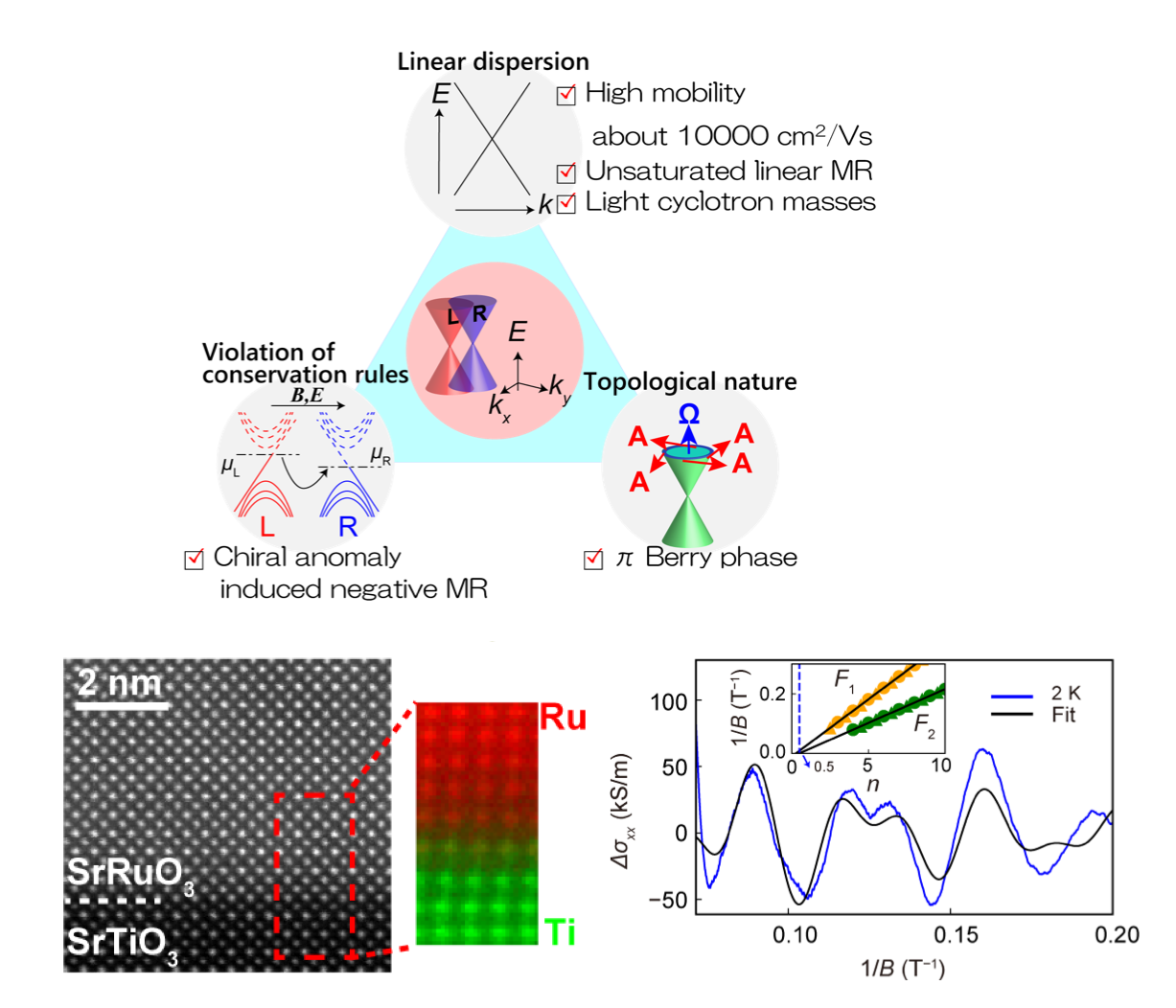
Our pioneering application of Bayesian optimization to molecular beam epitaxy (MBE) produced ultrahigh-quality ferromagnetic SrRuO₃ films, realizing quantum transport and quantum oscillations of Weyl fermions in a magnet. The Weyl fermions exhibit a quantum mobility of 1.1 × 10⁴ cm² V⁻¹ s⁻¹.
Five key transport signatures—nonsaturating linear positive magnetoresistance, chiral-anomaly-induced negative magnetoresistance, a π phase shift in quantum oscillations, light cyclotron masses, and high quantum mobility—together with first-principles electronic-structure calculations establish SrRuO₃ as a magnetic Weyl semimetal.
This work demonstrates AI for Science as a driver of discovery in condensed-matter physics: AI-guided growth made previously inaccessible quantum phenomena experimentally observable. We now use ultrahigh-quality SrRuO₃ films as a research platform to investigate surface Fermi-arc transport, strain-controlled magnetism, and ferromagnetism in monolayer perovskite SrRuO₃.
Key publications
- Quantum transport evidence of Weyl fermions in an epitaxial ferromagnetic oxide
- Correlated Ligand Electrons in the Transition-Metal Oxide SrRuO₃
- Single-layer spin-orbit-torque magnetization switching due to spin Berry curvature generated by minute spontaneous atomic displacement in a Weyl oxide
- High-mobility two-dimensional carriers from surface Fermi arcs in magnetic Weyl semimetal films
[Ultra-wide-bandgap semiconductors]
The world's first single-crystalline β-Ga₂O₃ films grown by sputtering
We established sputtering as a route to single-crystalline β-Ga₂O₃, expanding the possibilities for ultra-wide-bandgap semiconductor growth.
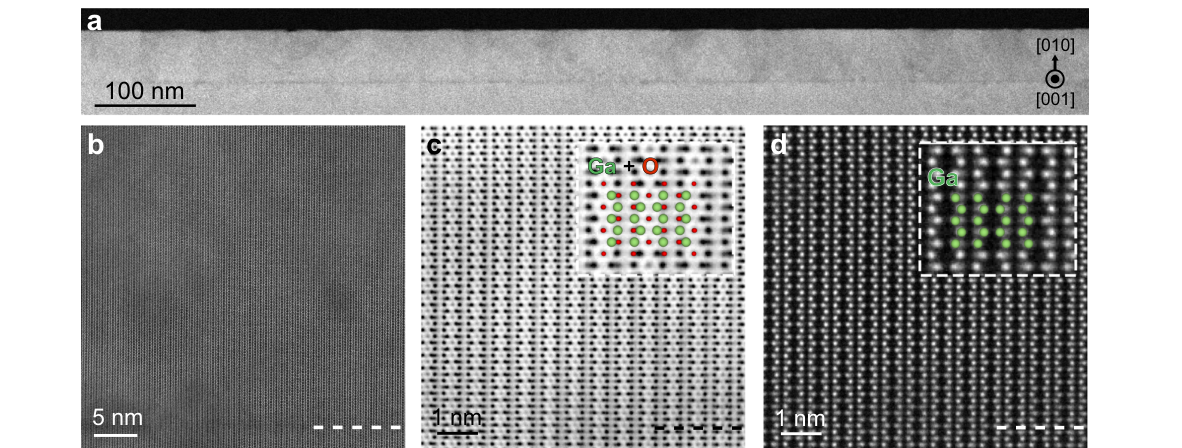
We achieved the world's first single-crystalline β-Ga₂O₃ homoepitaxy by sputtering. Growth conditions discovered on sapphire were transferred directly to β-Ga₂O₃ substrates without additional optimization.
Atomic-resolution scanning transmission electron microscopy confirms continuous, well-ordered atomic columns without grain or rotational-domain boundaries.
This breakthrough expands the capabilities of sputtering to single-crystalline semiconductor epitaxy, opening a new pathway toward the practical application of ultra-wide-bandgap semiconductors. The same study also established an interpretable self-driving workflow that turns optimization data into validated, human-usable growth rules.
02 AI for Science & Self-Driving Laboratories
[Machine-learning-driven epitaxy]
The world's first implementation of machine learning in epitaxial thin-film growth
We pioneered machine-learning-driven epitaxy, using Bayesian optimization to turn experimental results into the next growth decision.
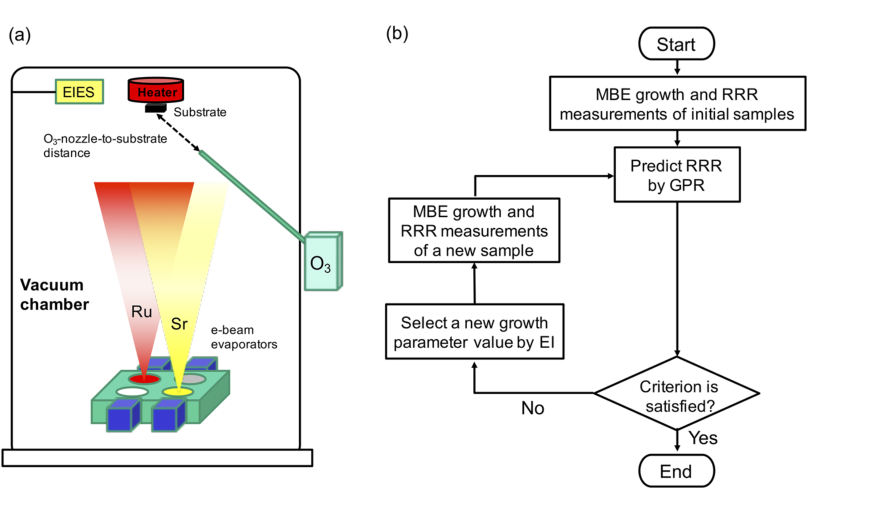
We introduced Bayesian optimization into SrRuO₃ molecular beam epitaxy (MBE), establishing the world's first implementation of machine learning in epitaxial thin-film growth. A high-quality film with a residual resistivity ratio exceeding 50 was obtained in only 24 growth runs.
The 2019 implementation sequentially optimized Ru flux, growth temperature, and ozone-nozzle-to-substrate distance. Each growth decision incorporates measured results and predictive uncertainty, establishing a systematic approach to experimental design.
This method produced the ultrahigh-quality films that led to the discovery of Weyl fermion quantum transport in a magnet. By developing new Bayesian optimization algorithms, we enabled robust optimization despite experimental failures and more effective exploration beyond suboptimal growth conditions through adaptive prior means. These advances broaden the reach of machine-learning-driven materials synthesis.
Key publications
[Physics-informed Bayesian optimization]
Physics-informed optimization beyond existing data
Physical knowledge enables efficient extrapolation to unexplored growth conditions and reveals new materials insights.
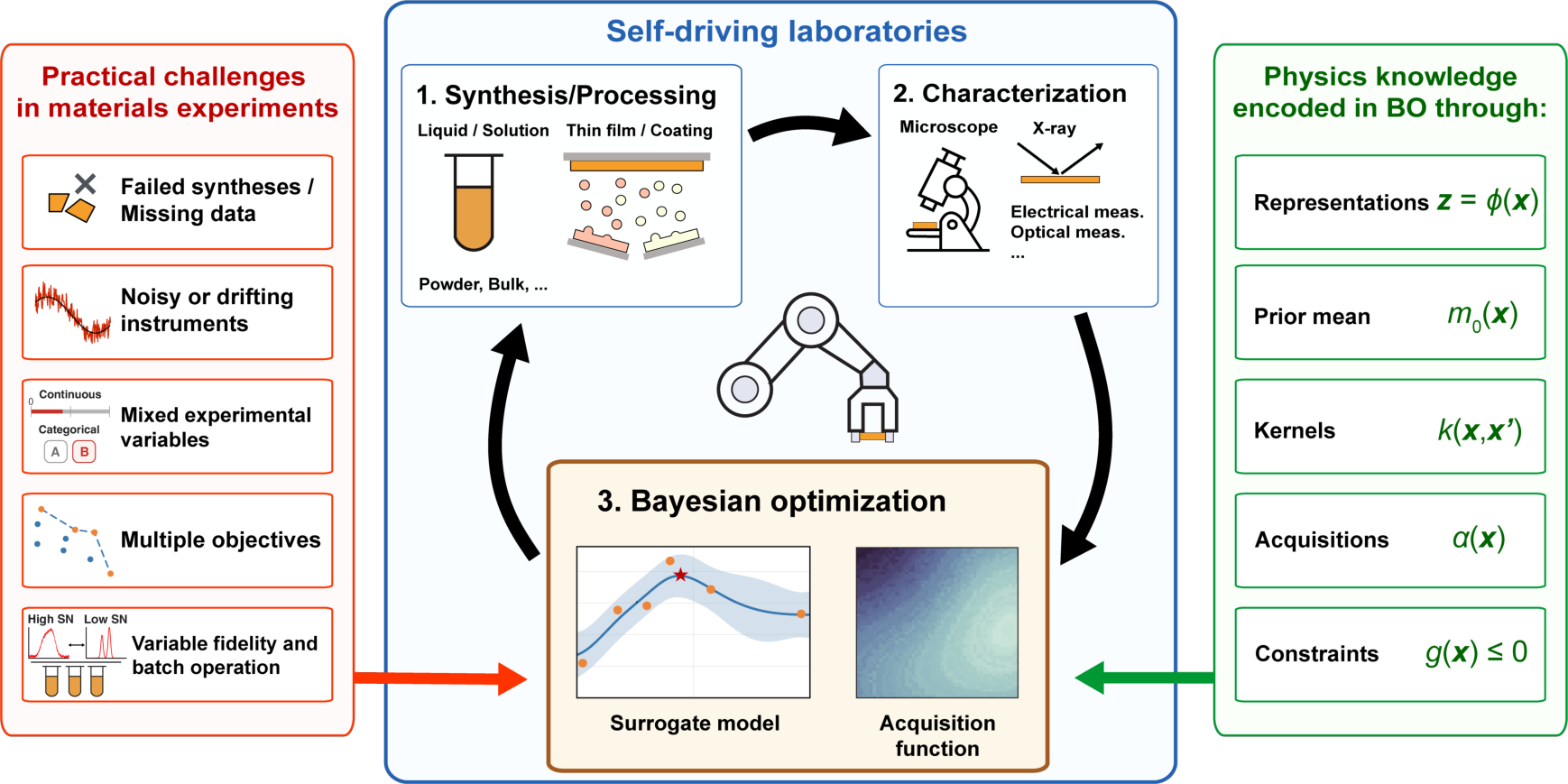
Physics-informed Bayesian optimization (PIBO) integrates statistical learning with physical knowledge. For InGaAsP growth by metal-organic chemical vapor deposition (MOCVD), Vegard’s law and gas-flow/composition relationships guide the search for growth conditions that simultaneously achieve the desired bandgap wavelength and lattice matching to the InP substrate.
PIBO achieved target compositions beyond the initial experimental-data range, reaching two target wavelength conditions in just one and six additional growth runs, respectively. This advance opens a pathway toward more efficient fabrication of optoelectronic devices that underpin optical communications. Beyond optimization, PIBO also predicted reduced Ga incorporation in As-rich growth conditions—a compositional trend not captured by the original physics model.
A complementary method embeds stoichiometric knowledge in the acquisition weighting for oxide thin-film growth. Together, these studies establish practical ways to integrate physics into predictive models and experimental decisions, extending optimization beyond the reach of existing data.
Key publications
- Physics-informed Bayesian optimization suitable for extrapolation of materials growth
- Physics-informed acquisition weighting for stoichiometry-constrained Bayesian optimization of oxide thin-film growth
- Bayesian Optimization for Self-Driving Materials Laboratories: From Algorithms to Physics-Informed Workflows
[Interpretable self-driving laboratories]
Autonomous optimization that generates human-usable scientific knowledge
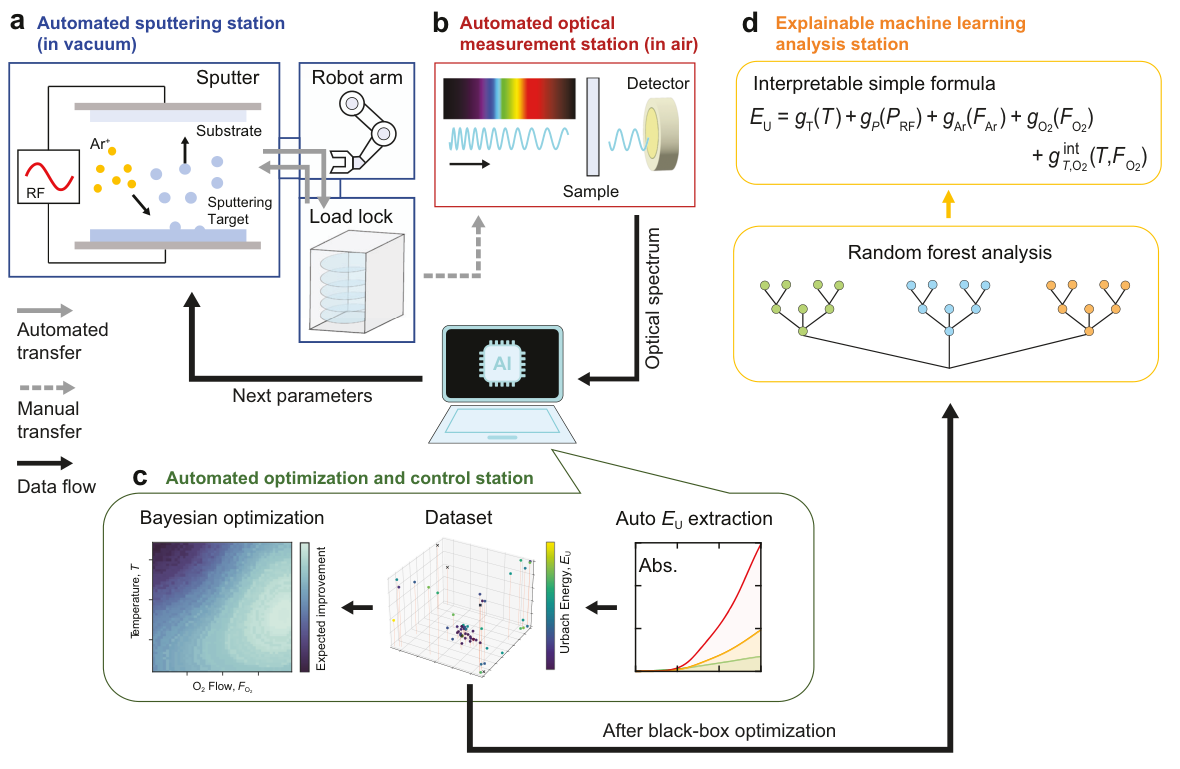
Our self-driving laboratory combines robotics and machine learning to autonomously optimize growth and generate validated, human-usable rules.
Our interpretable self-driving sputtering platform integrates automated experiments using robotics, optical evaluation of Urbach energy, and Bayesian optimization to autonomously optimize β-Ga₂O₃ growth conditions. It discovered high-quality growth conditions in a four-dimensional parameter space.
Random-forest analysis of data obtained during autonomous optimization revealed predominantly additive contributions from the four growth parameters and an interaction between growth temperature and oxygen flow. This yielded an actionable strategy: tune individual parameters sequentially, then refine temperature and oxygen flow together.
Researchers applied this strategy to reduce the Urbach energy from the original Bayesian optimization result of 182 meV to 163 meV. The improvement validates the extracted rules as a practical guide to materials synthesis, establishing a self-driving workflow that generates human-usable scientific knowledge.